If you’ve ever looked up at the night sky and thought, “Wow, that’s pretty,” then know that you’ve got something in common with Tycho Brahe, a 16th-century Danish astronomer who made a career out of observing the stars on his island Hven. Night after night, he recorded the planetary positions with precision. Then along came Johannes Kepler, who used Tycho’s data. From the data, he arrived at three key laws.
1. Planets don’t do perfect circles they orbit in ellipses
2. They sweep out equal areas in equal times, which is a fancy way of saying: closer to the sun = faster, further away = slower.
3. The sun is actually slightly off-centre to the left
Essentially, the time it takes a planet to orbit squared is proportional to the distance cubed.
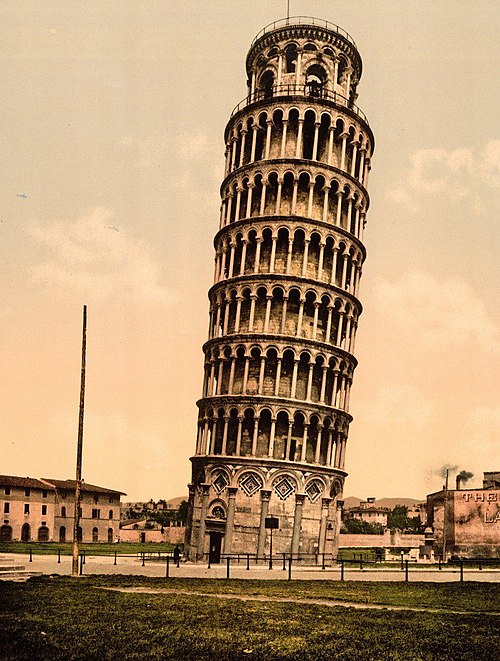
Meanwhile, Galileo Galilei was doing his own experiments- rolling balls down ramps, staring through telescopes, and allegedly, dropped things off the Leaning Tower of Pisa.
He concluded that if nothing messes with an object, it’ll just keep going forever in a straight line, known as inertia. Simple, but it ended the 2,000 year old notion of Aristotle’s “heavy things fall faster.”
Isaac Newton, then said: ‘okay, if Galileo says things keep moving in straight lines, why do planets loop around the sun instead?’ He came to the conclusion that there must be a force. If you swing a rock on a string above your head- you constantly pull it inward, otherwise it would fly off. Newton argued the sun does the same thing, but with an invisible force, known as gravity.
Newton figured out the strength of that pull drops off with the square of the distance. Double the distance, quarter the force. From that single law, {known as the inverse square} he could explain why orbits are ellipses, and why we get tides twice a day…and why apples don’t float off into space.
If we fast-forward a bit; Astronomers noticed the moons of Jupiter weren’t always on schedule- sometimes eight minutes late. Instead of scrapping Newton’s law, Ole Rømer suggested the problem wasn’t the planets, it was light itself taking time to travel across space.
And just like that: the finite speed of light was discovered.
As Richard Feynman points out, this discovery was possible thanks to the accuracy of Brahe’s data, which he says shows that the accuracy of data can lead to more discoveries.
Later, Uranus -insert joke here- wasn’t orbiting quite right either. Two mathematicians- Adams and Le Verrier- both said, “Maybe there’s another planet.” And sure enough Neptune appeared, exactly where the maths said it would be.
Score: 3-1 Physicists to Mathematicians.
Hopefully next time you’re walking you can appreciate the many years of discovery to finally understand why you don’t just float of.
Leave a Reply